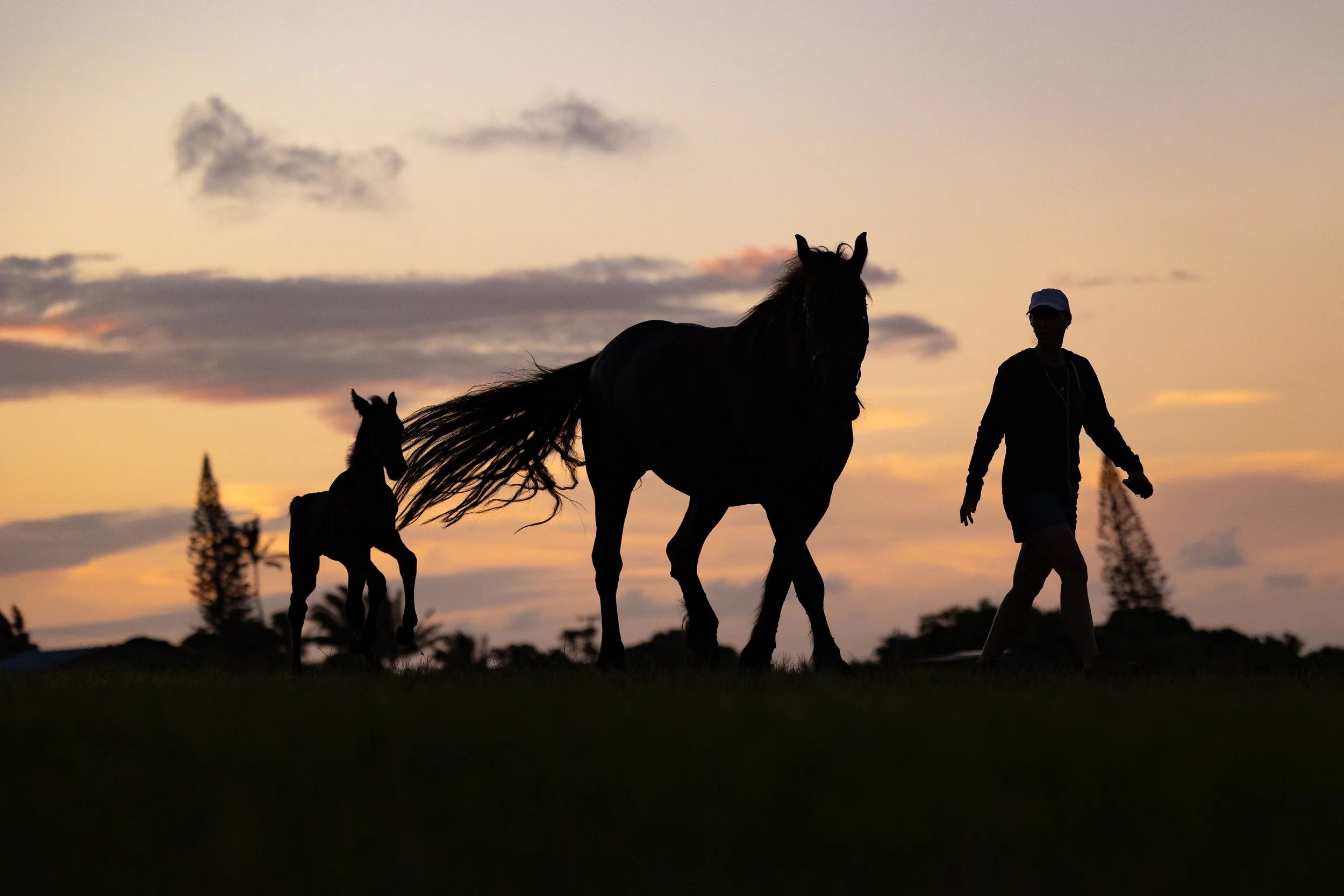
As I was driving home from the barn today, I was listening to a podcast about automating business systems and creating rhythms that allow a business to function and thrive even when you're not personally driving every moment of the day.
As I drove along I thought to myself, “sure that's great advice for a digital business or a business that doesn't involve living beings. But, how would that work, like really work with a barn, with horses?”That lead to the question, What would an automated horse barn look like?
The thought felt almost ridiculous. Horses aren't machines. They're living, breathing animals that require daily care, attention, and observation. I thought about it some more, opening my mind to the possibilities and the systems that could be created that would help automate a barn. That sent me down a path of reflection. I started taking inventory of the systems I have in place at my barn, and to my surprise, I realized I am well on my way to creating what could be called an "automatic stable."
What is an automatic stable?
When most people think of automation, they think of replacing human involvement. That's not what I'm talking about.
The systems I've built don't replace my time at the barn—they enhance it.
In fact, the entire goal has been to create an environment where the horses' needs are consistently met while allowing me to spend less time on repetitive chores and more time actually being with them and working with them.
Since I've largely been a one-woman show, efficiency has never been a luxury. It's been a necessity.
Building an "Automatic" Stable
Instead of arriving at the barn and being greeted by hungry anxious horses waiting for breakfast, I'm instead greeted by calm, relaxed, friendly faces all looking to say Hi, but clearly content. They've been eating throughout the morning with hay provided by their automatic hay feeder the Stable Grazer. They've wandered the track, stretching their legs and moving their bodies and the've helped themselves to fresh clean water. They are all happy and excited to see me, looking forward to the days plans.
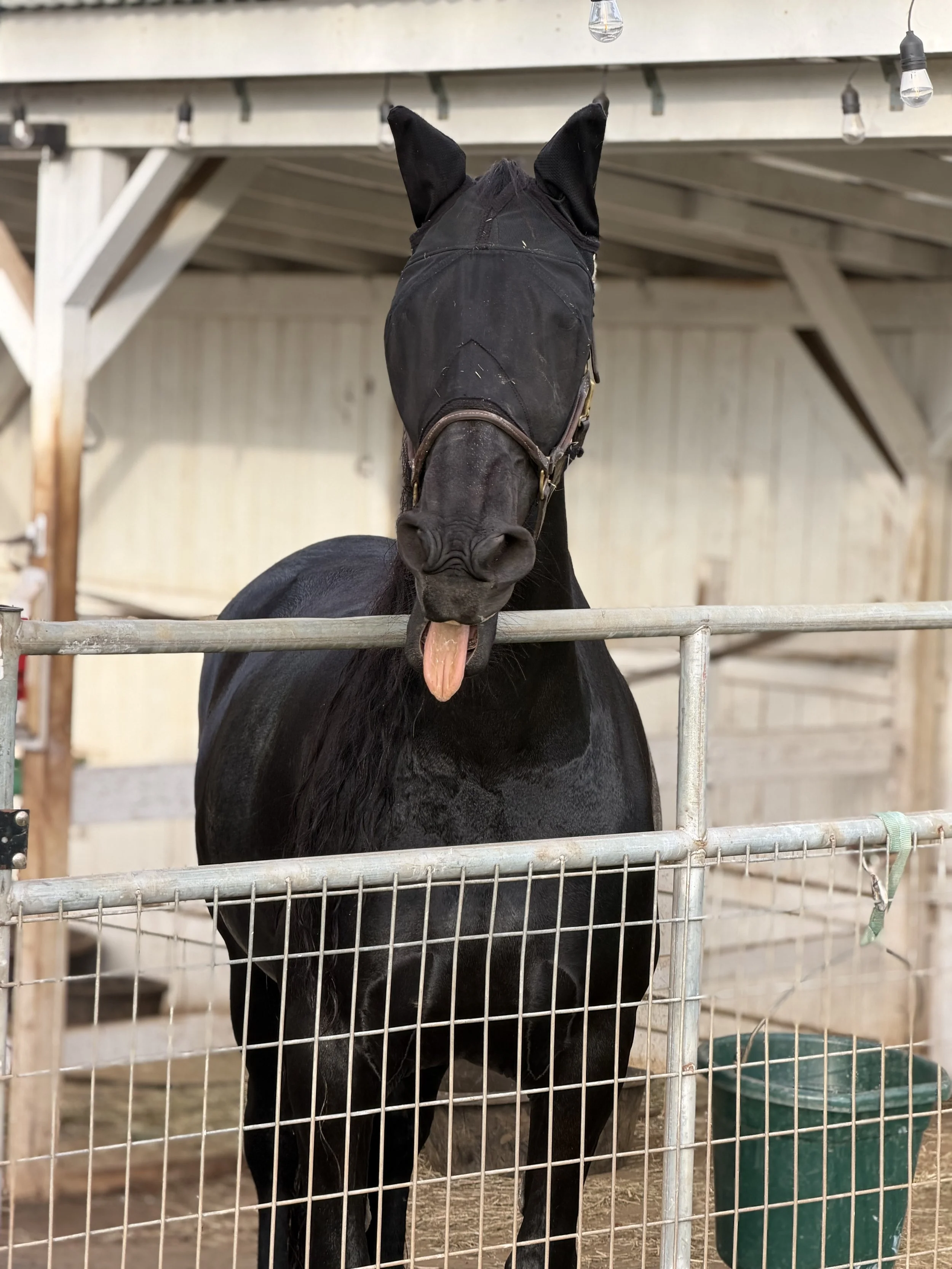
Everyone does get a small bucket of soaked timothy cubes with their Platinum Performance supplements mixed in, so there is always that task to complete, but it's simple and easy. While the horses are eating their mash, I pull out my tack and get ready for the day. It's perfect and no time is wasted just waiting for them to finish their meal.
I also have automatic water systems, so I never have to worry about the horses running out of water. I still put out buckets because the horses prefer their big water buckets to the smaller automatic waterers. I also like being able to monitor how much each horse is drinking. But the automatic systems provide tremendous peace of mind. Even on the hottest Maui summer day, I know the horses will always have access to fresh, clean water. I’ve also found that, even though most of the time they prefer a big bucket, sometimes, for whatever reason, the horses prefer the fresh water right out of the hose rather than the water sitting in the bucket. It's their option and I like providing choices whenever I can.
The Track System Changed Everything
One of the biggest improvements has been our track system, which allows for 24/7 turnout and flexability in turnout routines.
The track we built has two sides, allowing each horse to have their own space or for the track to be opened and shared. We covered it with wood chips, which helps reduce dust and prevents mud from developing during rainy weather.
The track connects to multiple pasture areas that I can open or close depending on the horses' needs and the condition of the grass. If one pasture needs rest, I simply rotate access to another. If a horse needs less grass—or no grass at all—I can close pasture access completely, while still allowing the horse to move freely along the track between hay stations and back to the barn.
Each stall connects directly to the track, eliminating the need for daily turnout and bring-in routines. Another added benefit is that the horses spend much of their time outside rather than standing in their stalls. I'm fortunate that my horses generally prefer to do their business outside when they have that option available. As a result, the stalls stay significantly cleaner, which reduces the amount of mucking I need to do each day and also cuts down on bedding expenses. It's one of those small advantages that adds up over time while still supporting the horses' natural desire to move freely throughout the day.
I've also designed the property with flexibility in mind. Gates throughout the barn and pasture areas allow me to adjust access as needed. I can secure horses in their stalls, leave stalls open for 24/7 turnout, create smaller turnout areas, or open access to larger spaces.
I really appreciated that flexibility when our newest foal, Giavanah, was born.
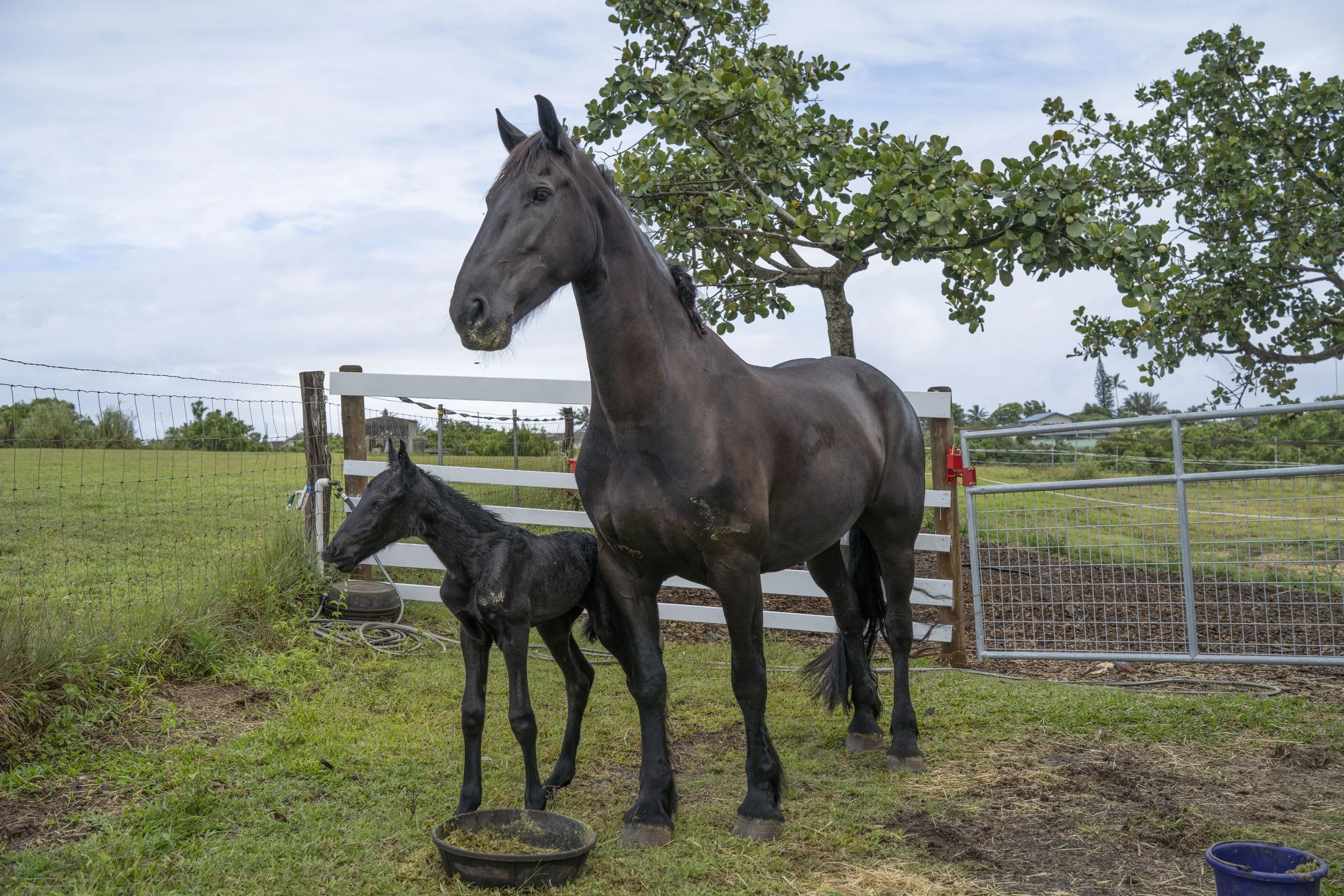
During those first few days, I wanted her close enough that I could keep a careful eye on her, but I also wanted Momma Izzie to have room to move and stretch. By adjusting a few gates, I could create exactly the amount of space they needed.
As Giavanah grew stronger and more confident, I gradually opened more and more of the property to them. It felt a little like watching a child venture farther and farther from home.
Everything is designed to be adaptable, efficient, and most importantly, horse-focused.
More Time for What Matters
As a result of the systems I’ve put in place, the amount of time I spend feeding, turning out, mucking stalls, and managing basic barn chores has been dramatically reduced.
Instead, I get to spend my time doing the things I truly enjoy—grooming, bathing, braiding, riding, training, and simply being with the horses.
The funny thing is that I never intentionally set out to build automated systems.
What I wanted was a highly efficient barn with a natural flow that kept the horses' needs at the center of every decision.
I believe horses need regular turnout. They need frequent feedings that support digestive health and help prevent many common health issues. Consistent feeding schedules also reduce stress because the horses know what to expect and when to expect it.
In many ways, these systems have allowed me to duplicate myself. They've reduced the need for additional labor and eliminated multiple daily trips to the barn just to feed or turn horses out, while still allowing me to provide excellent care.
Automation Doesn't Replace Horsemanship
Now, don't get me wrong. There is absolutely no substitute for being at the barn every day.
There is no substitute for seeing the horses with my own eyes, working with them, training them, and caring for them. There is no substitute for noticing the little things—who cleaned up all their hay, who left some behind, who seems a little quieter than usual, or who needs a bit of extra attention.
The purpose of automating systems isn't to spend less time with the horses. It's actually to spend more quality time with them.
More time connecting.
More time training.
More time enjoying them.
Good systems create order, rhythm, and flow. They reduce stress, eliminate unnecessary work, and allow daily life to run more smoothly. That benefits me, and it benefits the horses.
At the center of every decision I make is their well-being—both physical and mental.
Looking around the barn today, I realized that what I've really built isn't an automatic stable.
I've built a system that handles the routine tasks so I can focus on the relationships.
The horses still need me every day. I still need to notice the details, make adjustments, and be present.
But instead of spending my time hauling hay, filling water buckets, and moving horses from one space to another, I now spend more time with them, connecting with them,grooming, training, riding, and simply being with them.
That's the real purpose of automation—not creating distance, but creating more opportunity for connection.
And for both me and the horses, that's been a very worthwhile endeavor.